AI screening helps more people with diabetes access sight-saving eye care
New research suggests that AI-supported screening for diabetic retinopathy can nearly double the rate at which people with diabetes attend important specialist eye follow-ups compared to standard screening methods.
Paste the copied caption into your Instagram post. Caption links are not clickable; add the article URL to a Story link sticker or your profile link.
Open InstagramFor information, not personal medical advice. Discuss treatment decisions with a qualified clinician.
Key takeaways
- AI-supported screening for diabetic retinopathy nearly doubles the likelihood of patients attending specialist follow-up appointments compared to standard screening.
- Early detection and treatment of diabetic retinopathy are vital to prevent vision loss, but many patients miss recommended specialist visits after initial screening.
- Current research focuses on follow-up attendance and is limited to one institution; the effect of AI-supported screening on long-term vision outcomes is still unclear.
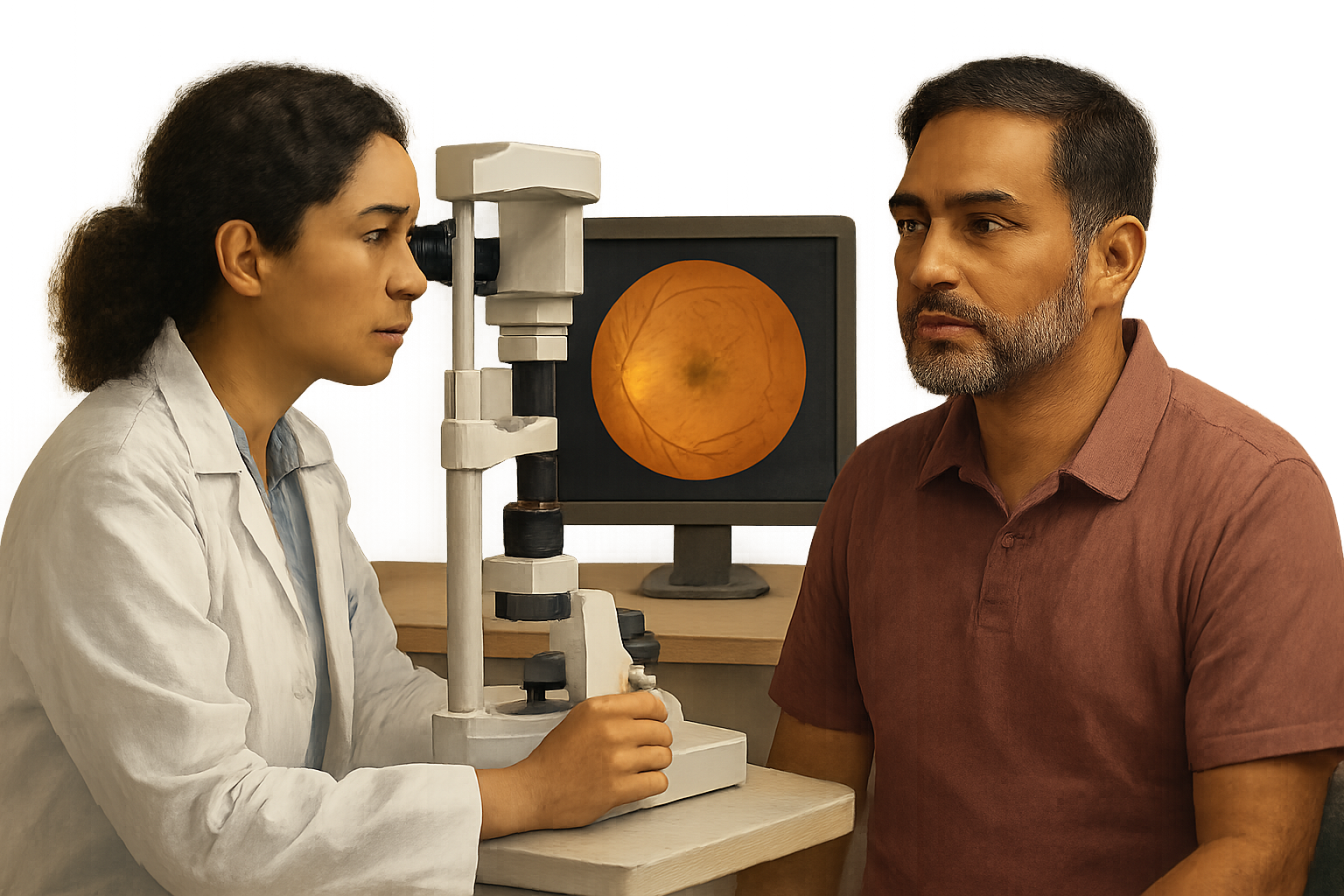
What the finding means: Diabetic retinopathy is a major cause of blindness worldwide among people with diabetes. Early detection and treatment are key to preventing vision loss, but many individuals do not attend recommended specialist appointments after initial screening. New research from the London School of Hygiene & Tropical Medicine (LSHTM) indicates that using artificial intelligence (AI) to support eye screening may improve follow-up care attendance.
The evidence: This study compared outcomes between people receiving AI-supported screening for diabetic retinopathy and those receiving standard screening procedures. The AI-supported approach was associated with nearly double the likelihood of patients attending specialist follow-up appointments. This suggests that AI can help identify individuals needing further care more effectively or encourage patients to engage with care after screening.

Limitations and uncertainties: The current data focus on attendance at follow-up appointments rather than long-term vision outcomes. It remains unclear whether increased attendance directly leads to better preservation of eyesight. Additionally, the research originates from a single institution, and the generalizability to other healthcare systems or populations is not yet established. The study does not provide details on the AI technology used or potential challenges, such as accessibility or cost.
Possible implications: If further confirmed, incorporating AI in diabetic retinopathy screening programs could improve patient engagement and timely access to specialist eye care, possibly reducing the burden of diabetes-related blindness globally. However, ongoing research is needed to clarify the impact on vision outcomes and to address implementation considerations.
Source: Medical Xpress
Paste the copied caption into your Instagram post. Caption links are not clickable; add the article URL to a Story link sticker or your profile link.
Open Instagram