Experimental Injection Causes Fat Cells to Self-Destruct, Reducing Belly Fat
Scientists have developed an experimental injection that targets and destroys fat cells, leading to significant reductions in belly fat. Early findings also hint at potential benefits in preventing weight regain after stopping certain weight loss drugs.
Paste the copied caption into your Instagram post. Caption links are not clickable; add the article URL to a Story link sticker or your profile link.
Open InstagramFor information, not personal medical advice. Discuss treatment decisions with a qualified clinician.
Key takeaways
- An experimental injection triggers fat cell apoptosis, aiming to reduce harmful belly fat linked to metabolic issues in obesity.
- Early research shows the injection reduces belly fat volume and may help prevent weight regain common after stopping drugs like Ozempic and Wegovy.
- Study details, safety, long-term effects, and regulatory status are unclear; more research is needed before clinical use.

Researchers have created an experimental injection designed to make fat cells self-destruct. This approach aims to reduce dangerous belly fat, which is a key contributor to metabolic health problems associated with obesity.
What the Injection Does
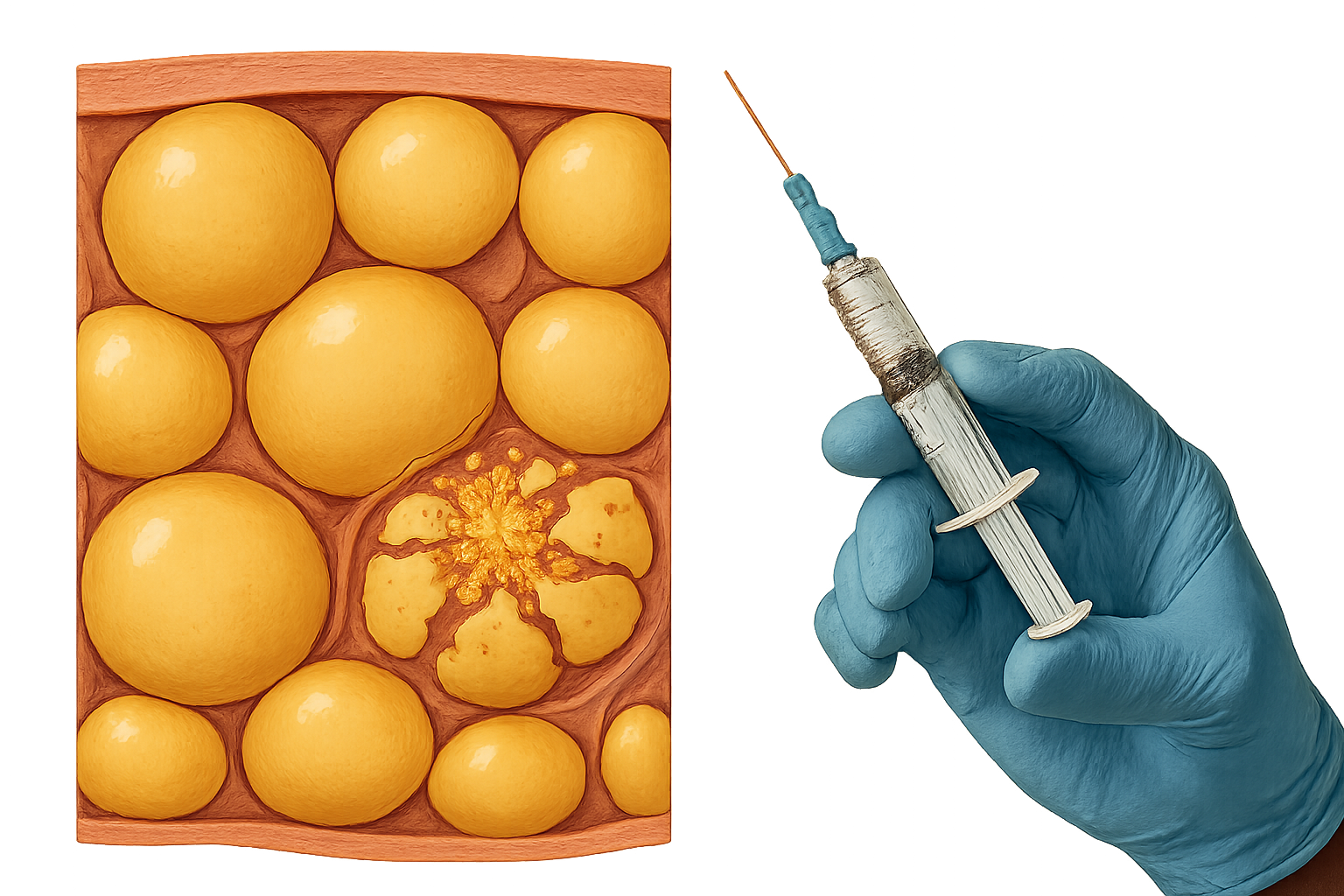
The injection triggers the programmed death of fat cells, a process known as apoptosis. By selectively inducing this self-destruction, the treatment reduces the number of fat cells, leading to decreases in belly fat volume.
Evidence to Date
Current information is from early-stage research. The details regarding whether the evidence comes from laboratory studies, animals, or human trials are not specified. However, the summary indicates that the injection significantly reduces dangerous belly fat.
Additionally, preliminary research suggests the injection may help prevent weight regain, a common problem observed when people stop using popular weight loss drugs such as Ozempic and Wegovy. These drugs work by suppressing appetite or altering metabolism, but weight often returns once treatment ends.
Limitations and Uncertainties
- It is unclear if the reported results come from animal models or human participants, as the source data do not specify study type or scale.
- The safety profile and any potential side effects of the injection are not described.
- Long-term effects, including durability of fat loss and impact on overall metabolic health, remain unknown.
- No information is available about regulatory approvals or when such a treatment might become accessible.
Potential Implications
If future research confirms safety and effectiveness in humans, this injection could represent a new method to treat obesity by physically reducing fat cell numbers, rather than just limiting fat storage or appetite.
This could also help address the common problem of weight regain after stopping certain weight loss medications, potentially improving long-term weight management.
However, more research is needed before conclusions about clinical use or availability can be made.
Source: ScienceDaily Medical
Paste the copied caption into your Instagram post. Caption links are not clickable; add the article URL to a Story link sticker or your profile link.
Open Instagram