Gut Bacteria Molecule Linked to Higher Alzheimer’s Risk in Early Research
Scientists have identified a molecule made by gut bacteria, called ImP, that may be connected to increased Alzheimer’s risk, brain protein buildup, and faster cognitive decline. This association opens new research directions but more evidence is needed before considering treatments.
Paste the copied caption into your Instagram post. Caption links are not clickable; add the article URL to a Story link sticker or your profile link.
Open InstagramFor information, not personal medical advice. Discuss treatment decisions with a qualified clinician.
Key takeaways
- Higher levels of the gut bacteria molecule ImP in blood are linked to increased Alzheimer’s-related brain protein build-up and faster cognitive decline.
- Current evidence is observational and does not prove that ImP causes Alzheimer’s or whether reducing ImP affects disease progression.
- Future research, including clinical trials, is needed to understand how ImP is produced, influenced, and whether targeting it could help manage or prevent Alzheimer’s.
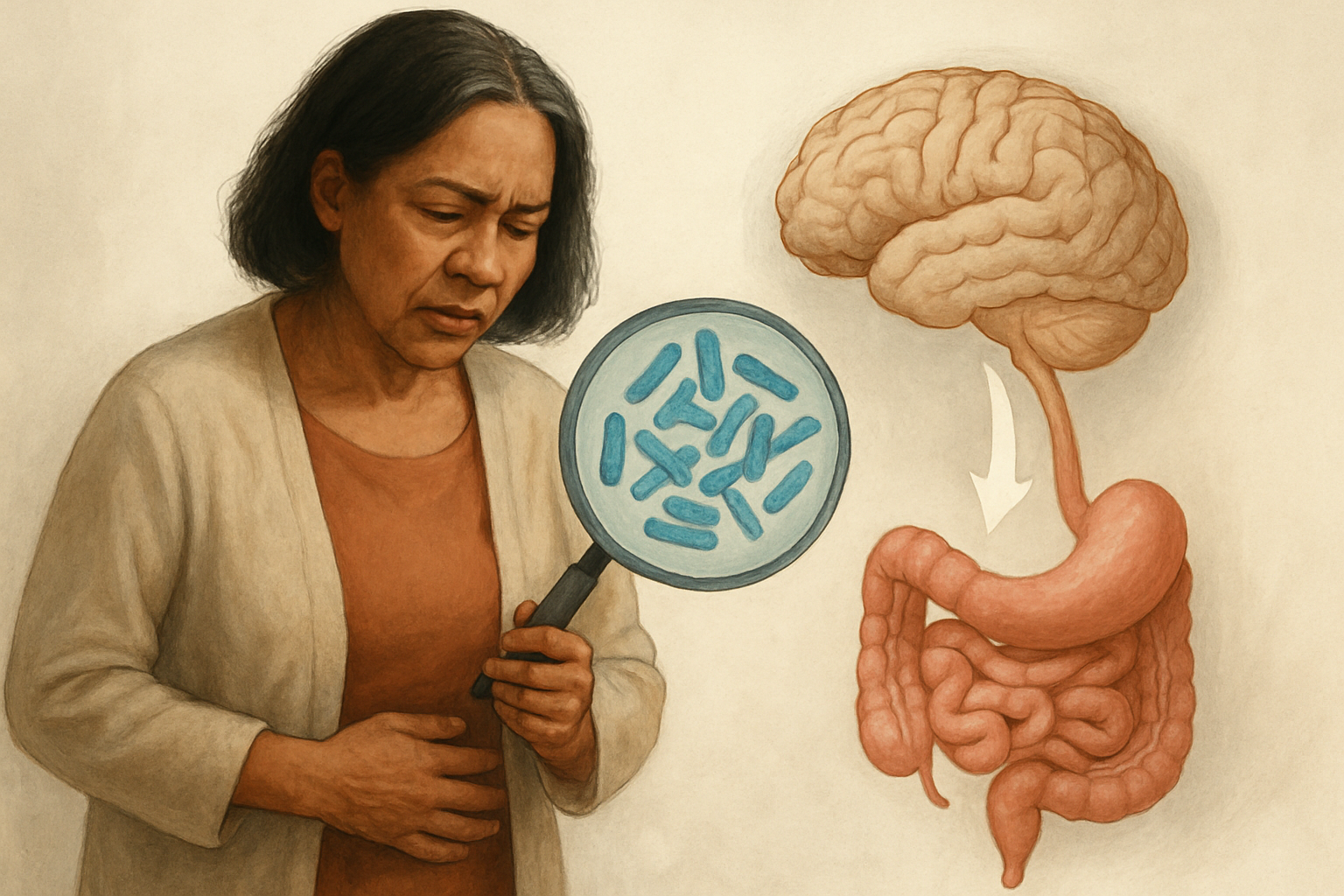
Recent research has found a connection between a molecule produced by certain gut bacteria, known as ImP, and factors linked to Alzheimer’s disease. Alzheimer’s is a dementia involving harmful buildup of proteins in the brain and gradual loss of cognitive abilities.
What Scientists Found
Scientists observed that higher levels of ImP in the bloodstream correlated with increased accumulation of Alzheimer’s-related proteins in the brain and with faster cognitive decline. This suggests that the gut-produced molecule may play a role in the disease process.
Type of Evidence
These findings currently come from observational studies in humans where ImP levels, brain protein markers, and cognitive test results were measured. Because these are correlations, it is not yet clear whether ImP directly causes these brain changes or if it is a marker linked to other factors.

What Is Not Known
At this stage, research has not demonstrated that reducing ImP can prevent or slow Alzheimer’s. It is also unclear which gut bacteria produce ImP and how diet or other interventions might influence its levels. Further research, including clinical trials, is necessary to explore these questions.
Implications for the Future
If future studies confirm that ImP contributes to Alzheimer’s, therapies targeting gut bacteria or ImP levels could become a novel approach to managing or preventing dementia. However, such treatments are not currently available.
In summary, the link between a gut bacteria molecule and Alzheimer’s-related brain changes is an intriguing discovery that highlights the complex role of the gut-brain connection. More research is needed before any medical recommendations can be made.
Source: ScienceDaily Medical
Paste the copied caption into your Instagram post. Caption links are not clickable; add the article URL to a Story link sticker or your profile link.
Open Instagram