Intensive Breathing Linked to Altered Consciousness and Brain Communication
A recent brain-imaging study found that intensive breathing exercises can significantly reduce blood flow to the brain and change how different brain areas communicate. These changes are associated with altered consciousness experiences similar to those caused by some psychedelic drugs.
Paste the copied caption into your Instagram post. Caption links are not clickable; add the article URL to a Story link sticker or your profile link.
Open InstagramFor information, not personal medical advice. Discuss treatment decisions with a qualified clinician.
Key takeaways
- Intensive breathing exercises can reduce brain blood flow by up to 45% and induce sensations like altered perception, vivid imagery, and changes in self-experience.
- Changes in brain network communication appear to be more significant in altered consciousness states than reduced blood flow alone.
- The study does not establish a direct cause-effect link, long-term effects, or risks of intensive breathing exercises, requiring further investigation.
What the Study Found
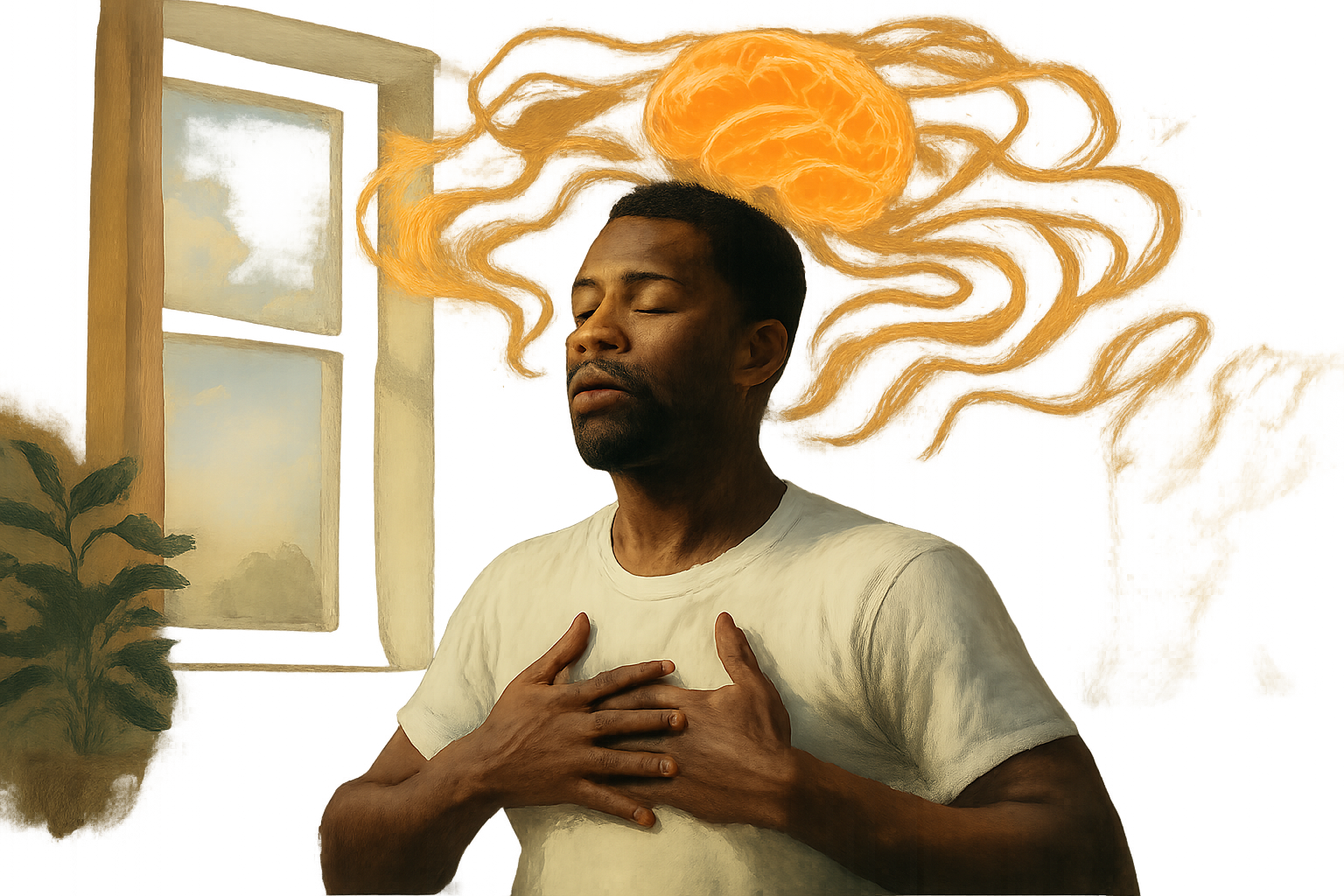
A new study presented at the ECNP Congress in Munich investigated how intensive breathing exercises affect the brain. Researchers observed that such exercises can reduce blood flow to the brain by as much as 45%. In addition, participants reported sensations such as altered perception, vivid mental imagery, a feeling of unity, and changes in how they experienced their sense of self.
How the Brain Is Affected
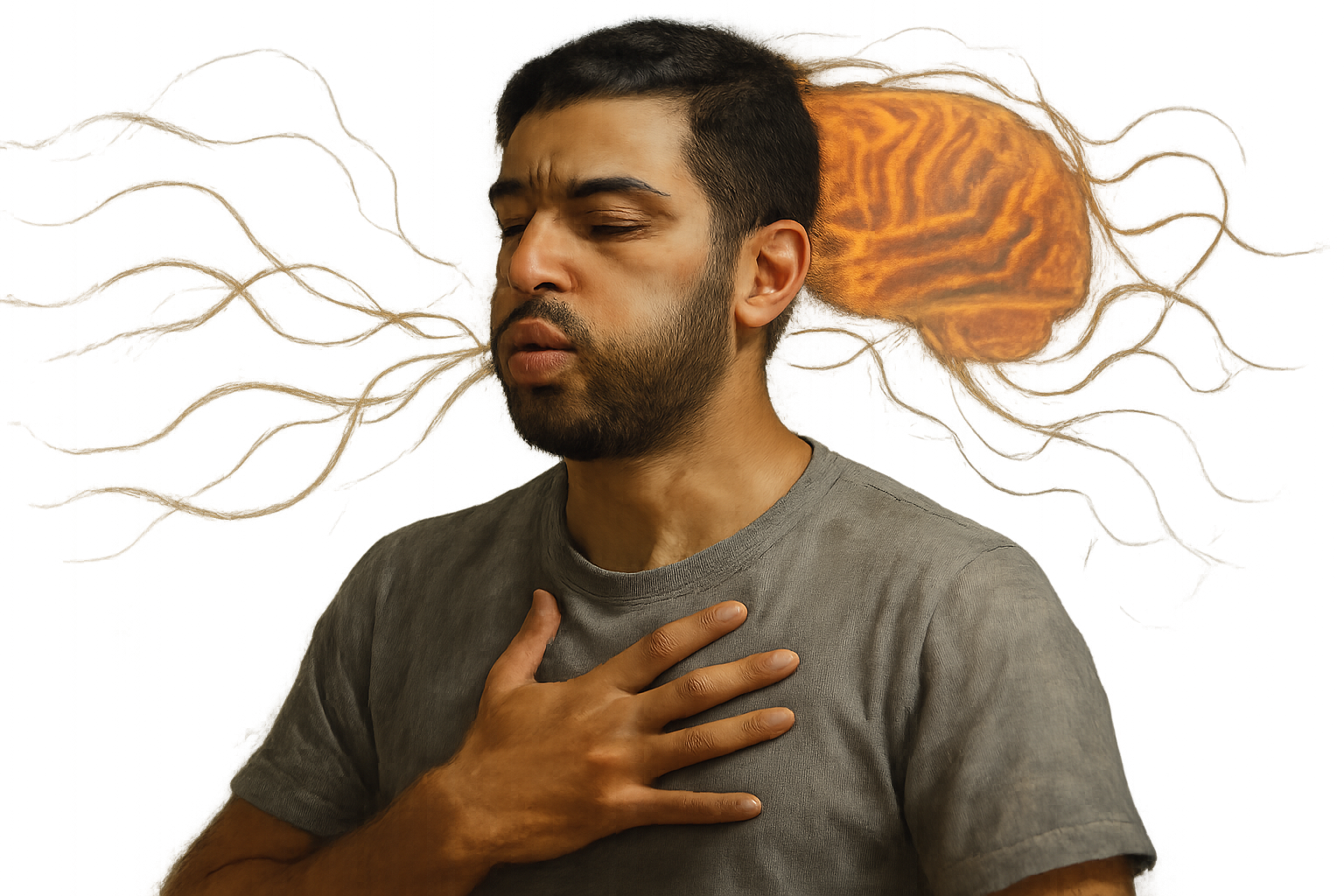
The brain-imaging data showed that the breathing exercises altered the communication between different brain networks. The researchers suggest that these changes in brain connectivity play a more important role in the altered states of consciousness than the reduced blood flow alone.
Evidence Limitations
This study is based on observed changes during and after intensive breathing exercises in a controlled setting. While participants described experiences similar to some effects of psychedelic drugs, this does not mean the breathing exercises cause the same effects or are comparable in all ways. The research does not establish a direct cause-effect relationship between breathing patterns and specific brain states. It also does not provide information on long-term effects or potential risks of such breathing exercises.
Possible Implications
Understanding how breathing exercises influence brain activity and consciousness may contribute to therapies targeting mental health conditions or stress. However, more research is needed to fully understand the mechanisms involved, how safe these practices are, and whether brain blood flow reduction has any harmful effects.
Source: Medical Xpress
Paste the copied caption into your Instagram post. Caption links are not clickable; add the article URL to a Story link sticker or your profile link.
Open Instagram