Mutation in DNA-Packaging Protein Linked to Breast Cancer Spread
Scientists found that a mutation called H2BE113K in a DNA-packaging protein helps breast cancer cells grow and spread to the lungs, revealing possible new targets for treatment.
Paste the copied caption into your Instagram post. Caption links are not clickable; add the article URL to a Story link sticker or your profile link.
Open InstagramFor information, not personal medical advice. Discuss treatment decisions with a qualified clinician.
Key takeaways
- A mutation called H2BE113K in the histone protein H2B affects DNA packaging and is linked to increased breast cancer growth and spread in lab and animal studies.
- Breast cancer cells with this mutation show more aggressive behaviour, including higher colony formation and lung metastasis in animal models.
- The study did not involve patient trials, so the exact impact of H2BE113K in humans and its potential as a treatment target require further clinical research.
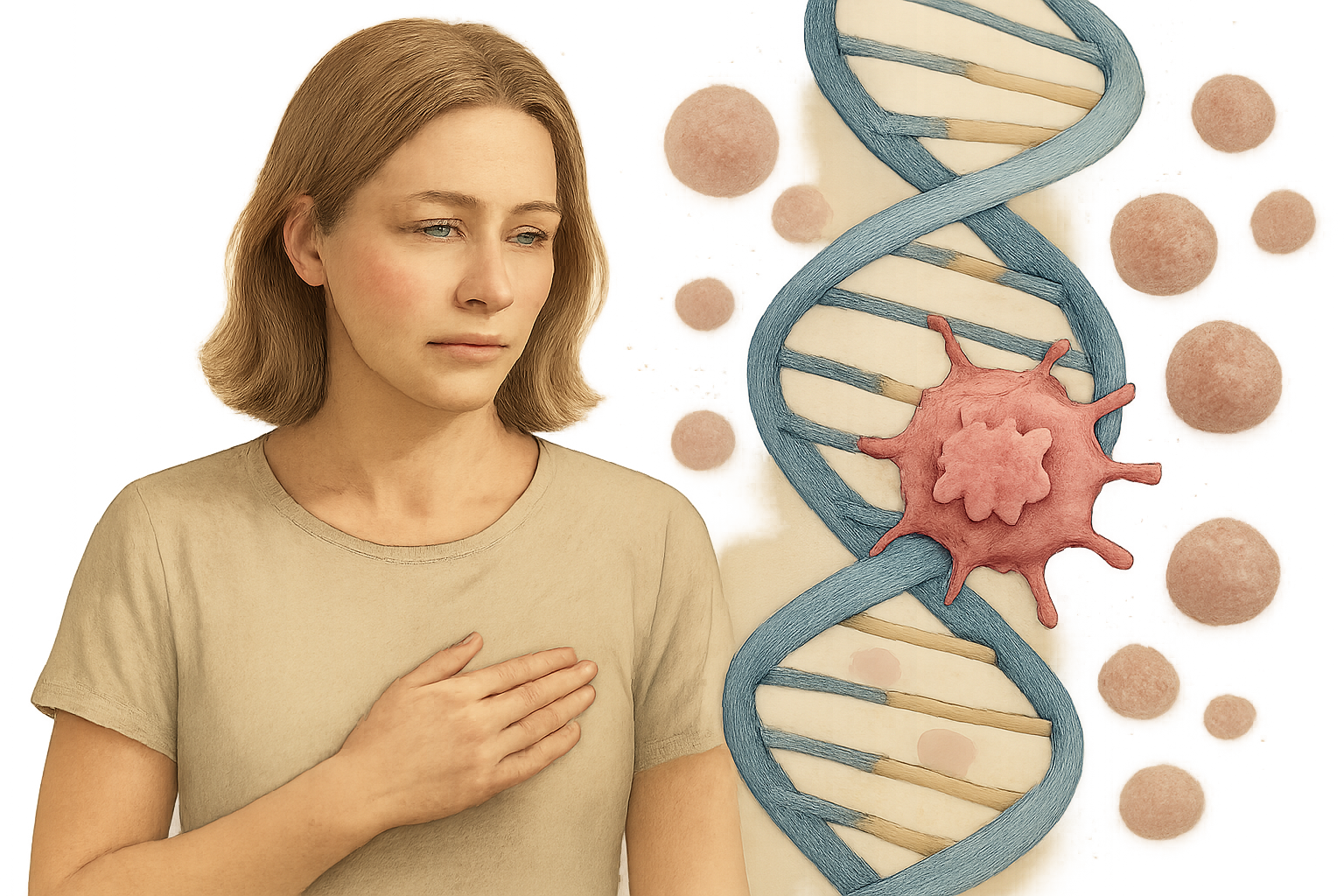
A research team led by Professor Chan Kui-ming from the Department of Biomedical Sciences at City University of Hong Kong investigated how a specific mutation in a DNA-packaging protein affects breast cancer progression. They focused on a mutation called H2BE113K, which changes a single amino acid in the histone protein H2B involved in organizing chromatin, the structure that packages DNA inside cells.
What the researchers found
The team discovered that cells carrying the H2BE113K mutation showed increased formation of colonies in lab experiments, an indication that these cells can grow more aggressively. Furthermore, in animal studies, breast cancer cells with this mutation were more likely to spread and form secondary tumors in the lungs, a process called metastasis.
At the molecular level, the mutation affected chromatin regulation, altering how DNA is packaged and how genes are expressed. These changes in cellular function appear to contribute to cancer progression.
Evidence and limitations

The research included experiments both in cell cultures (laboratory evidence) and animal models, showing the mutation’s role in promoting cancer growth and spread. However, findings from laboratory and animal studies do not always translate directly to humans. The research did not include clinical trials or studies involving breast cancer patients, so the exact impact of this mutation in people remains to be confirmed.
Additionally, while the mutation is linked to more aggressive cancer behavior, the studies have not yet shown that targeting H2BE113K safely and effectively treats breast cancer in patients.
Possible implications
Understanding how H2BE113K promotes breast cancer growth and metastasis could help scientists develop new therapies that specifically target this mutation or its effects on chromatin. Such targeted treatments might improve outcomes for patients with breast cancers harboring this mutation in the future.
Further research, including patient-based studies, is needed to confirm these findings and explore treatment potential.
Source: Medical Xpress
Paste the copied caption into your Instagram post. Caption links are not clickable; add the article URL to a Story link sticker or your profile link.
Open Instagram