New knee arthritis treatment delivers lasting pain relief without surgery
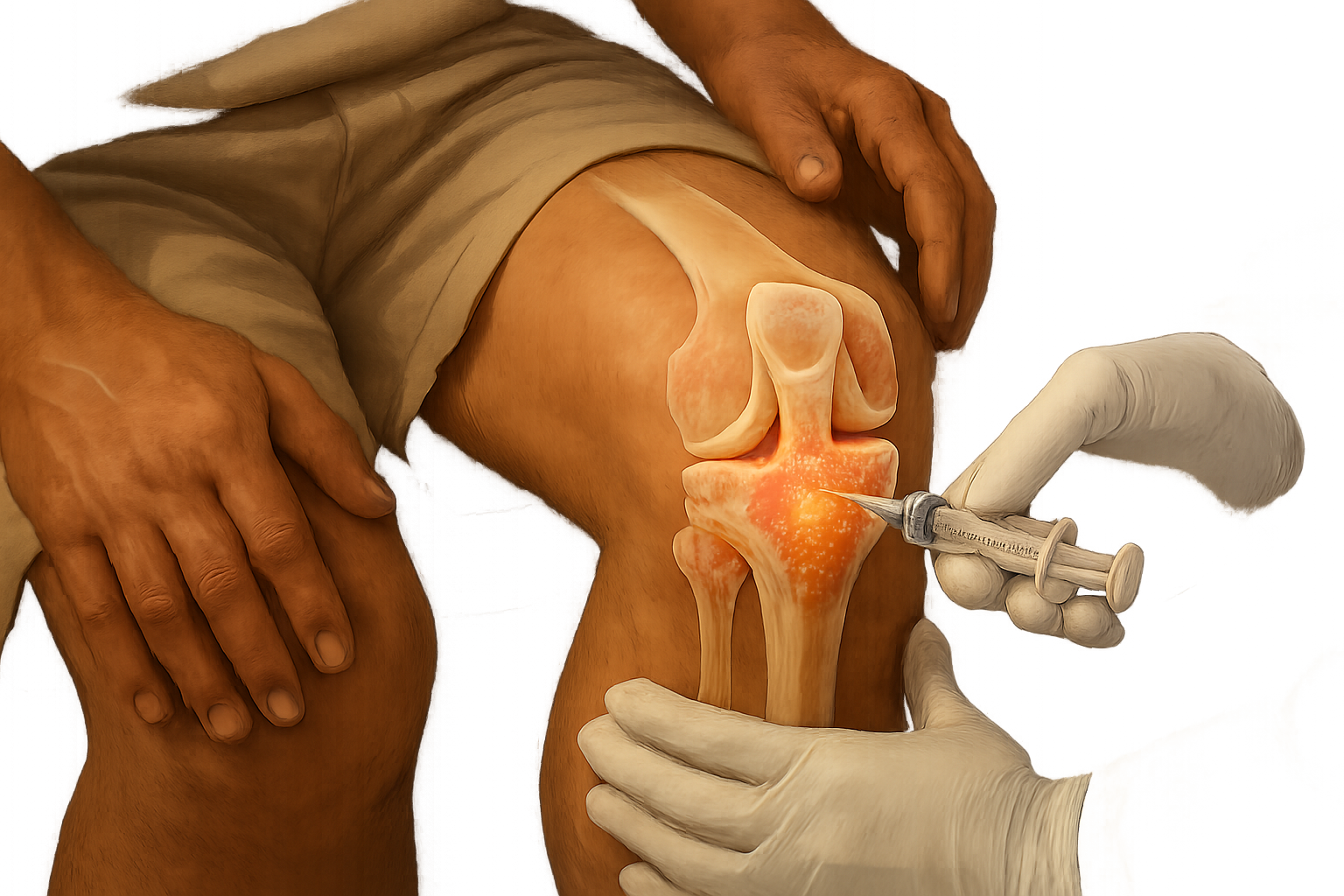
A new treatment for knee arthritis uses microscopic dissolvable particles to block abnormal blood vessels, reducing inflammation and pain. About 80% of patients in a study reported meaningful pain relief lasting at least a year without needing surgery.
Paste the copied caption into your Instagram post. Caption links are not clickable; add the article URL to a Story link sticker or your profile link.
Open InstagramFor information, not personal medical advice. Discuss treatment decisions with a qualified clinician.
Key takeaways
- A novel knee arthritis treatment injects tiny, dissolvable particles to block abnormal blood vessels, aiming to reduce inflammation and pain without surgery.
- In a study of 194 patients, about 80% reported clinically meaningful pain relief lasting at least 12 months.
- More research is needed to assess effects on joint function, quality of life, safety beyond one year, and comparisons with other non-surgical options.

What is this new treatment?
This new approach targets knee arthritis by injecting tiny, dissolvable particles that block abnormal blood vessels involved in the disease process. The goal is to reduce inflammation and relieve pain without needing joint replacement surgery.
What evidence supports its effectiveness?
In a study involving 194 patients, about 80% experienced pain relief that was considered clinically meaningful. This improvement lasted for at least 12 months after treatment, suggesting the effects may be long-lasting.
What are the limitations and what is still unknown?
The treatment has shown promise in this study, but more research is needed. For example, the study does not explain if symptom relief leads to improved joint function or quality of life. There is also no information on potential side effects or long-term safety beyond one year. The results represent patient-reported pain relief, which is an important but subjective measure. It is unknown how this treatment compares to other non-surgical options or which patients benefit most.
What could this mean for people with knee arthritis?
If confirmed by further research, this minimally invasive treatment could offer an alternative to surgery, reducing recovery times and surgical risks. It might be especially helpful for patients who cannot or prefer not to have joint replacement. However, access to this treatment, insurance coverage, and regulatory approval in countries like the US or Canada are not addressed.
Source: ScienceDaily Medical
Paste the copied caption into your Instagram post. Caption links are not clickable; add the article URL to a Story link sticker or your profile link.
Open Instagram