Rare study reveals a striking divide inside an Alzheimer’s patient’s brain
Researchers examined an Alzheimer's patient's brain and found areas without amyloid plaques had much less harmful tau protein buildup, suggesting amyloid removal might protect against memory loss.
Paste the copied caption into your Instagram post. Caption links are not clickable; add the article URL to a Story link sticker or your profile link.
Open InstagramFor information, not personal medical advice. Discuss treatment decisions with a qualified clinician.
Key takeaways
- A unique examination of an Alzheimer's patient's brain revealed that areas with removed amyloid plaques had much lower tau protein accumulation, compared to adjacent regions still affected by plaques.
- Tau protein, which forms tangles linked to Alzheimer’s symptoms and memory loss, was significantly reduced where amyloid plaques were cleared, suggesting a potential protective effect.
- The study examined brain tissue from one patient after death, highlighting a possible connection between amyloid plaque clearance and reduced tau buildup, but it cannot establish cause and effect.

A unique examination of an Alzheimer’s patient’s brain has uncovered a clear difference between regions affected by the disease. Areas where amyloid plaques were removed showed significantly lower levels of tau protein accumulation, which is linked to memory loss, compared to neighboring brain regions.
What the study found
The researchers observed that brain regions cleared of amyloid plaques had remarkably little tau — a protein that forms tangles associated with Alzheimer’s symptoms. In contrast, adjacent areas retaining amyloid plaques showed extensive tau accumulation and presumably more damage.
Understanding the evidence
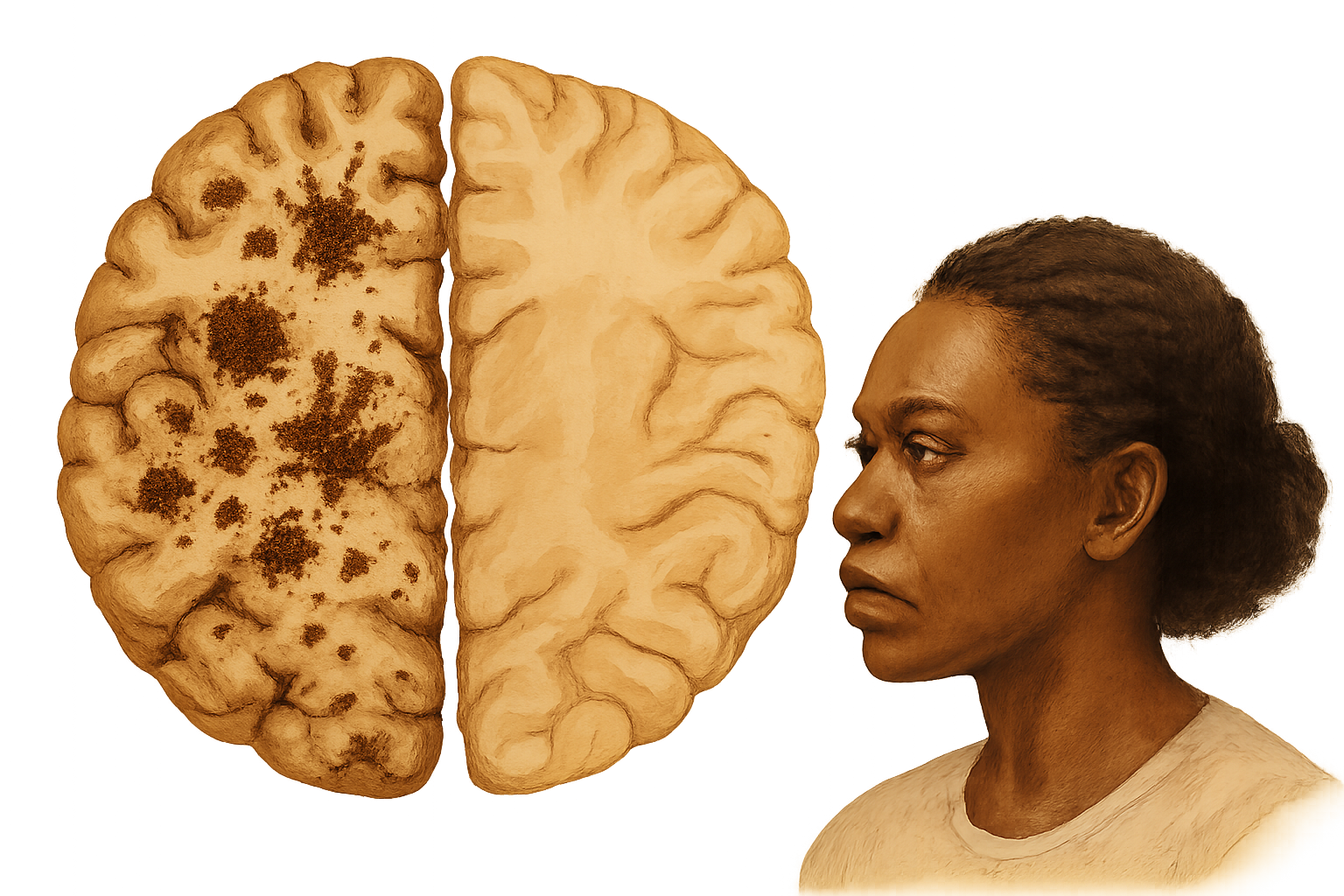
This study involved detailed examination of brain tissue from an individual with Alzheimer’s disease. It provides direct insight into how amyloid plaques and tau protein accumulation may relate within the human brain.
Because this research looked at a single patient’s brain after death, it cannot establish cause and effect but does highlight a potential connection between amyloid clearance and reduced tau accumulation.
What it means and unknowns
The findings suggest that early removal of amyloid plaques could have lasting protective effects by preventing or slowing tau buildup, which is more closely linked to memory loss and cognitive decline in Alzheimer’s. However, the study does not show whether amyloid removal can reverse existing damage or improve symptoms in patients.
Further research with more patients and in living subjects is needed to confirm these observations and understand if therapies targeting amyloid can slow disease progression when started early.
Source: ScienceDaily Medical
Paste the copied caption into your Instagram post. Caption links are not clickable; add the article URL to a Story link sticker or your profile link.
Open Instagram