Role of Intestinal Epithelial GSK3β in Neutrophil Reprogramming and Colorectal Cancer Progression
Research identifies GSK3β in intestinal epithelial cells as a regulator of fumarate-driven neutrophil changes that may promote colorectal cancer, based on laboratory and animal model studies.
Paste the copied caption into your Instagram post. Caption links are not clickable; add the article URL to a Story link sticker or your profile link.
Open InstagramFor information, not personal medical advice. Discuss treatment decisions with a qualified clinician.
Key takeaways
- Glycogen synthase kinase 3 beta (GSK3β) in intestinal epithelial cells regulates fumarate metabolism that reprograms neutrophils, potentially supporting colorectal cancer progression.
- Experimental and animal model research shows reprogrammed neutrophils driven by GSK3β contribute to tumour growth, but human relevance remains unclear.
- Further studies are necessary to confirm these findings and explore targeting the GSK3β-fumarate-neutrophil pathway as a treatment or prevention strategy for colorectal cancer.

Understanding the Finding
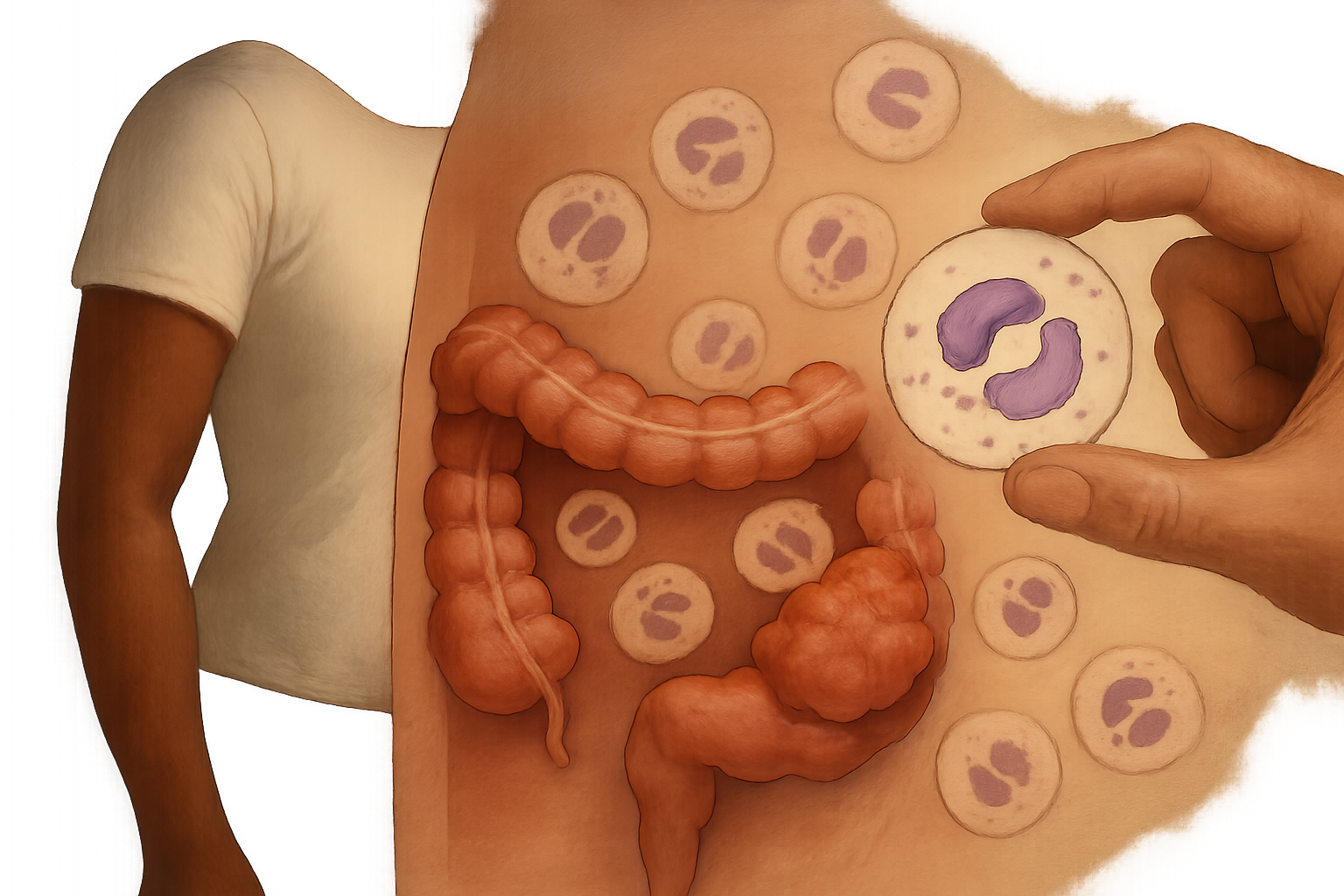
Researchers have studied how an enzyme called glycogen synthase kinase 3 beta (GSK3β) in intestinal epithelial cells influences immune cells known as neutrophils. The study suggests that GSK3β controls a metabolic process involving fumarate that leads to changes in neutrophils, which in turn may support the development of colorectal cancer.
Evidence Behind the Discovery
This finding comes from laboratory experiments and animal models examining the cellular interactions in the intestine. The researchers explored how GSK3β activity affects fumarate levels and how this metabolic change reprograms neutrophils. These reprogrammed neutrophils appear to promote tumor growth in colorectal cancer models.
Limitations and Uncertainties
Currently, evidence is limited to experimental models, so it is unclear how these findings translate to humans or whether targeting GSK3β would effectively prevent or treat colorectal cancer. More research, including clinical studies, is needed to confirm these mechanisms and evaluate potential therapeutic interventions.
Potential Implications
If further studies support these findings, targeting the GSK3β-fumarate-neutrophil pathway might offer a new approach for colorectal cancer therapy or prevention. However, this remains a preliminary discovery with no direct application in current medical practice.
Source: Nature Cancer
Paste the copied caption into your Instagram post. Caption links are not clickable; add the article URL to a Story link sticker or your profile link.
Open Instagram