Scientists discover how deep sleep builds muscle, burns fat, and boosts the brain
New research reveals a two-way relationship between deep sleep and growth hormone, showing how the brain balances recovery and wakefulness, with implications for metabolism and brain health.
Paste the copied caption into your Instagram post. Caption links are not clickable; add the article URL to a Story link sticker or your profile link.
Open InstagramFor information, not personal medical advice. Discuss treatment decisions with a qualified clinician.
Key takeaways
- Scientists found a complex two-way relationship between deep sleep and growth hormone that promotes muscle building, fat burning, and brain function.
- Growth hormone supports muscle growth and metabolism, while deep sleep phases help regulate its release, balancing physical repair with alertness.
- Poor sleep can disrupt this balance, potentially harming metabolism and brain health, though the research's specifics and applicability to humans remain unclear.
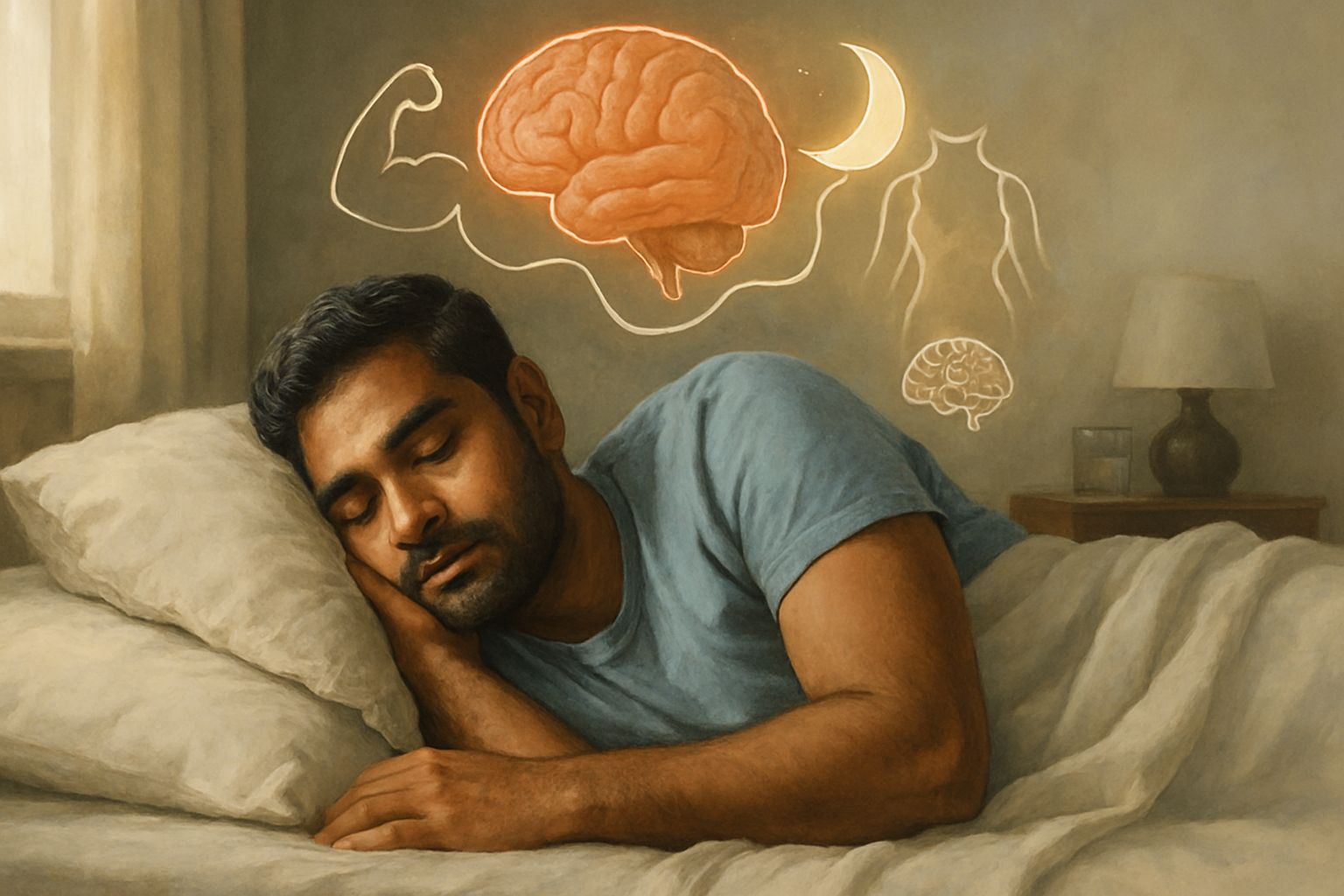
Scientists have uncovered important details about how deep sleep interacts with growth hormone to promote muscle building, fat burning, and brain function. Their findings show a complex two-way relationship that helps the brain balance the need for physical repair during sleep with the requirements of staying awake and alert.
The Finding
The research discovered that growth hormone and deep sleep influence each other. Growth hormone supports muscle growth and fat metabolism, while deep sleep phases help regulate its release. This balance ensures that the body recovers effectively overnight without disrupting daytime functions.
Evidence and Understanding
While the details come from scientific studies, the summary describes the relationship primarily in a physiological and neurological context. It shows how poor sleep can disrupt this balance, negatively affecting metabolism and brain health. However, the summary does not provide specific information about study methods, participants, or whether the evidence comes from human or animal research.
Limitations and Uncertainties
The current information does not explain whether these findings are based on laboratory studies, clinical trials, or observational research, leaving some uncertainty about how directly they apply to humans. Also, the summary does not describe whether this relationship has been tested as a potential treatment or intervention.
Possible Implications
The discovery could help explain why poor sleep leads to poorer metabolic health and brain problems and might support new treatments for sleep disorders or neurological conditions in the future. However, this remains an area for further study.
Source: ScienceDaily Medical
Paste the copied caption into your Instagram post. Caption links are not clickable; add the article URL to a Story link sticker or your profile link.
Open Instagram