Stem Cell–Like Tumor State May Help Identify High-Risk Small-Cell Lung Cancer
Researchers at Northwestern Medicine have found a stem cell–like state in small-cell lung cancer tumors that is linked to poor patient outcomes after chemoimmunotherapy, offering a potential way to identify high-risk patients.
Paste the copied caption into your Instagram post. Caption links are not clickable; add the article URL to a Story link sticker or your profile link.
Open InstagramFor information, not personal medical advice. Discuss treatment decisions with a qualified clinician.
Key takeaways
- A stem cell–like tumor state in small-cell lung cancer (SCLC) has been identified and is linked with poorer outcomes in patients treated with chemoimmunotherapy.
- Patients with tumors exhibiting this stem-like state show worse responses to standard treatments and lower survival rates.
- The study establishes a correlation but not causation between this tumor state and outcomes, and the findings do not yet lead to new treatment options.

What the Study Found
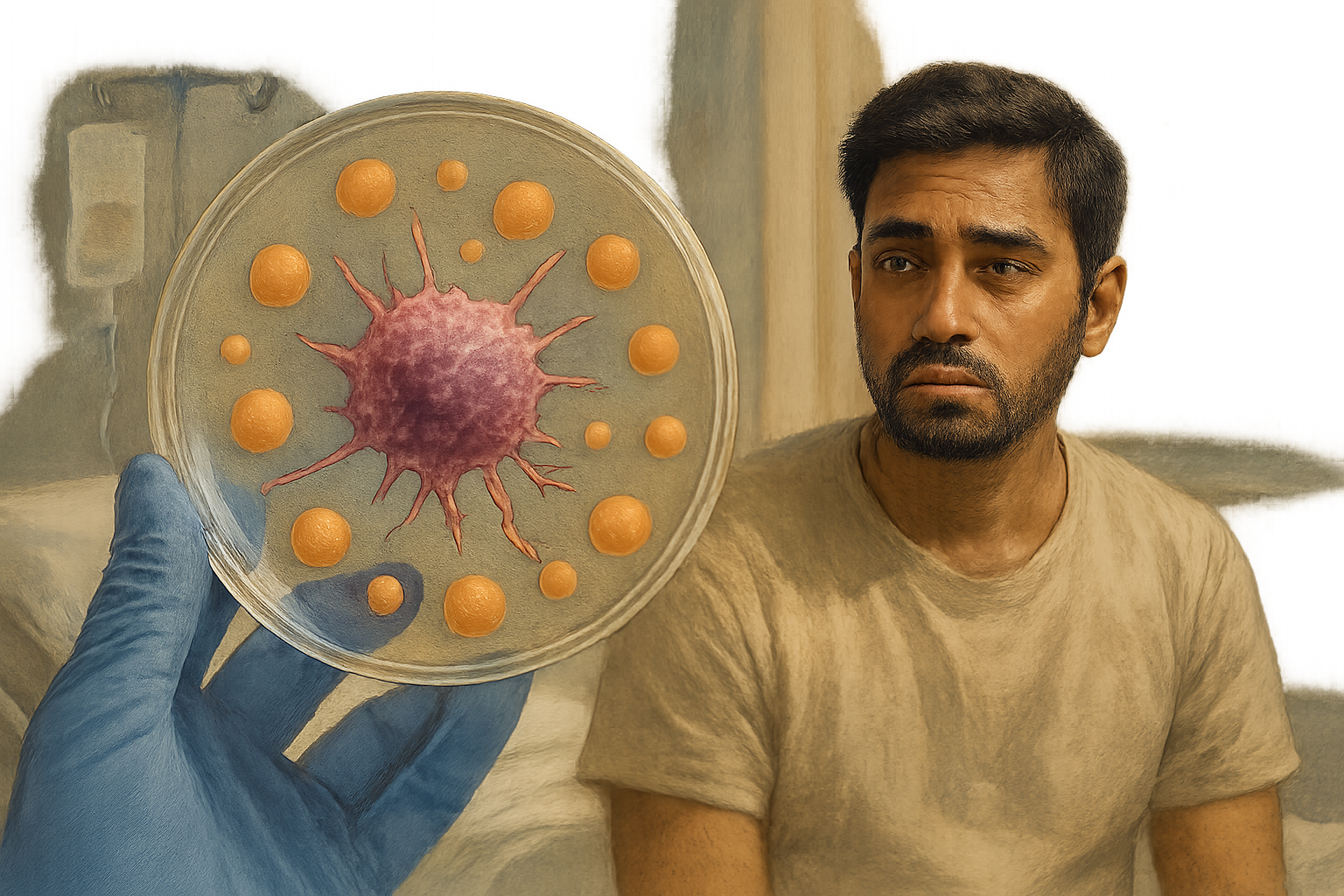
Scientists at Northwestern Medicine have identified a particular state in small-cell lung cancer (SCLC) tumors that resembles stem cells, which are cells that can develop into other cell types. This stem cell–like tumor state appears to be connected with especially poor outcomes in patients receiving chemoimmunotherapy, a treatment combining chemotherapy and immunotherapy.
Evidence Behind the Finding
The study analyzed tumor samples from patients with SCLC and detected this distinctive stem-like state. Patients whose tumors exhibited this state tended to have worse responses to standard chemoimmunotherapy treatments and poorer overall survival rates compared to others.
Limitations and What Is Still Unknown
It is important to note that this research mainly identifies a correlation between the stem cell–like tumor state and patient outcomes; it does not prove that this tumor state causes the worse outcomes. Further studies are needed to understand what drives this state and whether it can be targeted to improve therapy effectiveness. Additionally, the findings do not yet translate into new treatments available to patients.
Potential Implications
Recognizing this stem cell–like tumor state could help doctors identify which patients are at higher risk of poor outcomes following current treatments. This may eventually guide the development of new therapies specifically aimed at these high-risk tumors, but such advances remain in the research stage.
Source: Medical Xpress
Paste the copied caption into your Instagram post. Caption links are not clickable; add the article URL to a Story link sticker or your profile link.
Open Instagram