Targeted radioactive therapy may help delay spread of recurrent prostate cancer
A new study suggests that combining a targeted radioactive drug with radiation therapy may help control recurrent prostate cancer for a longer time compared to radiation alone.
Paste the copied caption into your Instagram post. Caption links are not clickable; add the article URL to a Story link sticker or your profile link.
Open InstagramFor information, not personal medical advice. Discuss treatment decisions with a qualified clinician.
Key takeaways
- Combining the radioactive drug 177Lu-PNT2002 with stereotactic body radiation therapy (SBRT) may help delay progression of recurrent prostate cancer compared to SBRT alone.
- The approach targets cancer cells more precisely, potentially improving control over recurrent prostate cancer without confirmed benefits on survival or quality of life.
- Study limitations include unclear size, follow-up duration, long-term outcomes, safety, and side effects, indicating need for further research.
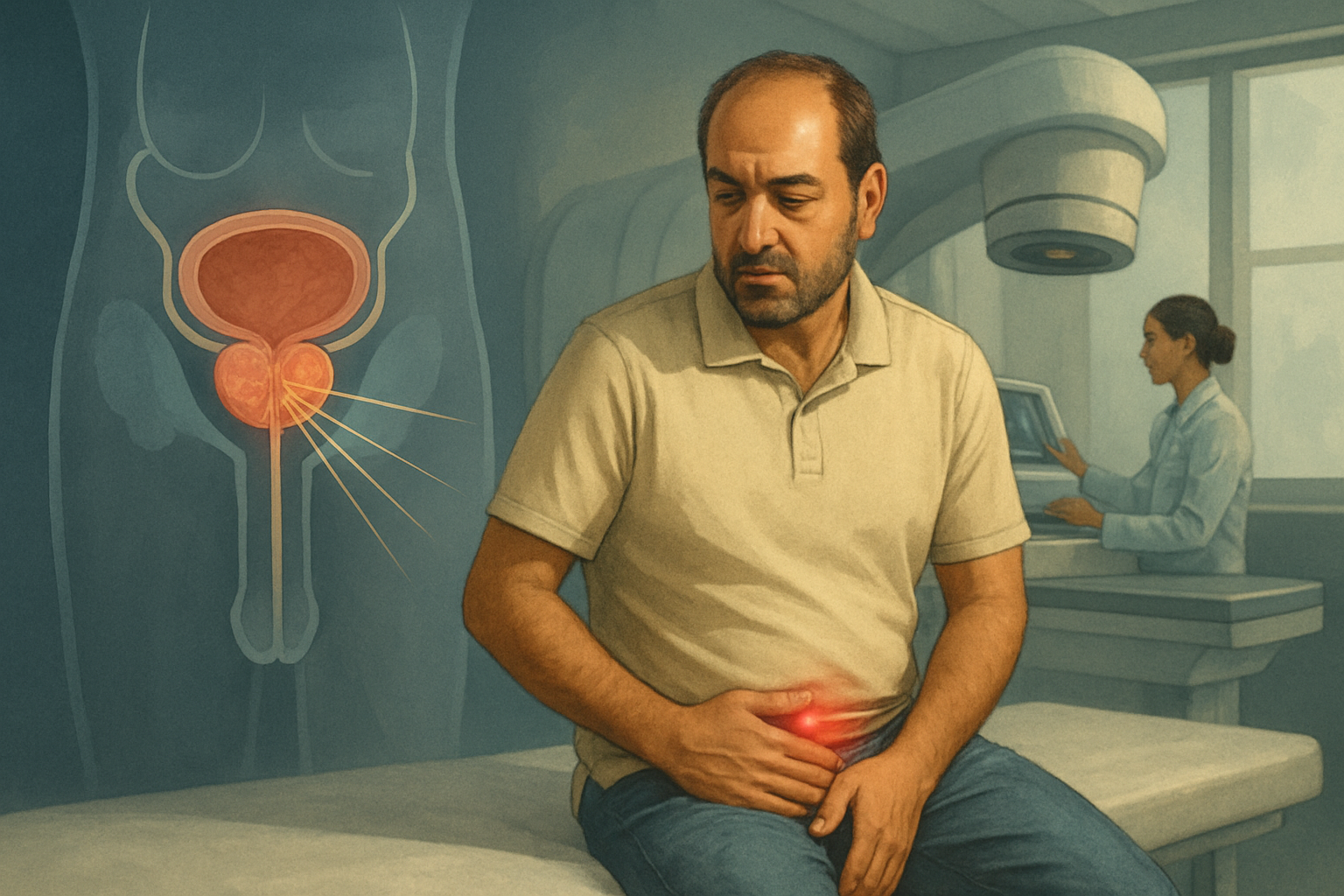
Researchers at UCLA Health Jonsson Comprehensive Cancer Center have explored a new approach for managing recurrent prostate cancer using a targeted radioactive drug combined with radiation treatment.
What the study found
The research evaluated the addition of a radioactive drug called 177Lu-PNT2002 to a radiation technique known as stereotactic body radiation therapy (SBRT). They observed that this combination might help keep recurrent prostate cancer under control for a longer period than SBRT alone.
Understanding the treatments
- Stereotactic Body Radiation Therapy (SBRT): A precise form of radiation that targets cancer tumors with minimal damage to surrounding tissues.
- 177Lu-PNT2002: A drug that delivers targeted radioactive particles to cancer cells, potentially enhancing cancer cell kill when combined with radiation.

Evidence and limitations
The study provides promising evidence for better control of recurrent prostate cancer when using the combination treatment. However, details such as the size of the study, duration of follow-up, and long-term outcomes remain unclear. The reported benefits focus on delaying cancer progression rather than curing the disease.
It is not specified whether the approach affects overall survival or quality of life. Side effects and potential harms from adding the radioactive drug to SBRT were not detailed in the summary.
This evidence does not yet confirm whether this combined treatment is safe and effective enough for routine use outside of clinical trials.
What this means for patients
While the findings may represent a step forward in managing recurrent prostate cancer, more research is needed to fully understand the risks, benefits, and long-term effects of adding 177Lu-PNT2002 to radiation therapy. Patients should consult their doctors about current treatment options and ongoing clinical trials.
Source: Medical Xpress
Paste the copied caption into your Instagram post. Caption links are not clickable; add the article URL to a Story link sticker or your profile link.
Open Instagram