Turning a Cancer-Fueling Protein into a Potential Cancer Fighter
Researchers found that activating the protein PPARD in immune cells can enhance their fat-burning ability and improve their capacity to attack tumors in lab studies, showing promise against multiple cancer types.
Paste the copied caption into your Instagram post. Caption links are not clickable; add the article URL to a Story link sticker or your profile link.
Open InstagramFor information, not personal medical advice. Discuss treatment decisions with a qualified clinician.
Key takeaways
- Researchers activated the protein PPARD in immune cells, improving fat metabolism and boosting their anti-tumor activity rather than blocking PPARD in cancer cells.
- Activating PPARD in immune cells slowed or stopped growth in several cancer types in laboratory studies, including colorectal, breast, ovarian cancers, and melanoma.
- The findings are based on lab experiments; no human trials exist yet, and the dual role of PPARD raises concerns about potential risks and unintended effects in patients.
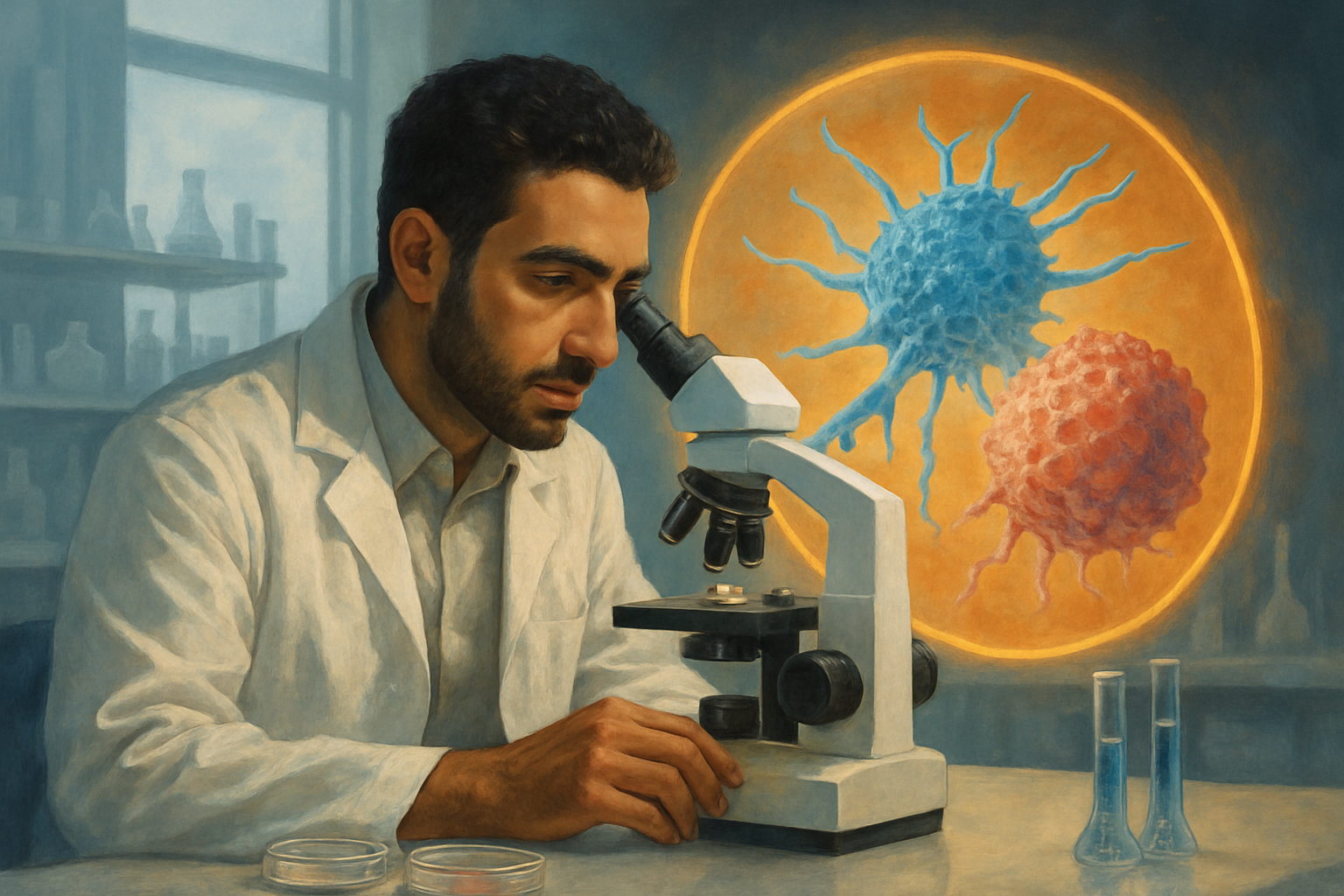
Scientists have explored a new approach to fighting cancer by targeting a protein called PPARD, which typically helps cancer cells grow and spread. Instead of blocking PPARD, researchers activated it in certain immune cells, leading to improved fat metabolism and stronger anti-tumor activity.
What researchers discovered
PPARD is known for fueling cancer growth, making it a troublesome protein in many tumors. However, researchers found that when PPARD is activated in immune cells rather than cancer cells, these immune cells become better at burning fat and more effective at attacking cancer cells.
Laboratory experiments demonstrated that activating PPARD in immune cells slowed or even stopped the growth of several types of cancer, including colorectal, breast, ovarian cancers, and melanoma.
Evidence and limitations

The findings are currently based on laboratory studies, meaning the work was done in controlled experiments outside the human body. This type of research usually involves cell cultures or animal models and does not yet confirm how the approach would work in patients.
There is no available information about trials in humans or whether this method could be safely and effectively used as a treatment. Additionally, the complex role of PPARD in both cancer cells and immune cells means there could be risks or unintended effects if this approach is used in people.
Potential implications
If future studies prove successful, activating PPARD in immune cells might become a novel strategy to boost the body's own ability to fight cancer. This could complement existing therapies, offering options for difficult-to-treat cancers such as colorectal, breast, ovarian cancers, and melanoma.
However, much more research is needed to understand the benefits, safety, and practical applications of this approach before it could be considered for clinical use.
Source: ScienceDaily Medical
Paste the copied caption into your Instagram post. Caption links are not clickable; add the article URL to a Story link sticker or your profile link.
Open Instagram