Unraveling the Lexicon of Complex Mutational Phenomena in Human Cancers
New research explores complex genetic mutations in human cancers, aiming to better understand the patterns and mechanisms of mutational changes that drive cancer development.
Paste the copied caption into your Instagram post. Caption links are not clickable; add the article URL to a Story link sticker or your profile link.
Open InstagramFor information, not personal medical advice. Discuss treatment decisions with a qualified clinician.
Key takeaways
- The study focuses on complex mutational phenomena in cancer, involving multiple genetic alterations acting together rather than simple single mutations.
- Analysis of human tumor DNA sequencing data reveals recurring complex mutation patterns and uses computational methods to categorize mutational signatures.
- Current findings do not establish direct cause-and-effect relations between mutation patterns and cancer outcomes; further research is required for clinical application.
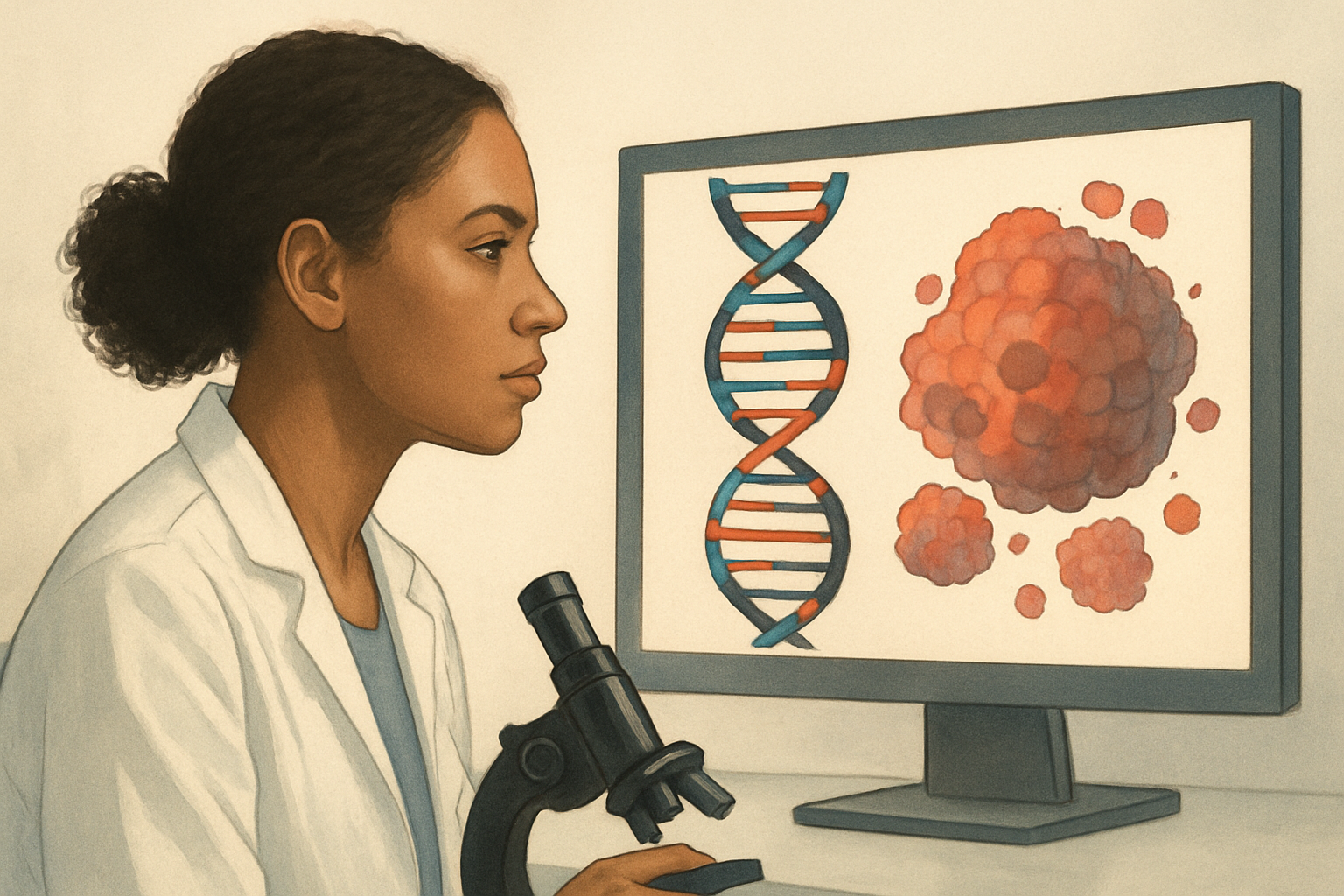
Understanding Complex Mutational Patterns in Cancer
Cancer arises through genetic changes, or mutations, that accumulate in cells. This research focuses on complex mutational phenomena—patterns of genetic alterations that are not simple single mutations but involve multiple changes acting together. By analyzing these complex mutations, scientists aim to better map out how different types of mutations contribute to cancer development.
Evidence From Human Tumor Analysis
The study analyzes genetic data from human cancers to identify recurring complex mutation patterns. This kind of research is based on sequencing tumor DNA and using computational methods to detect and categorize mutational signatures. These findings come purely from human sample analysis and do not involve laboratory models or animal testing.
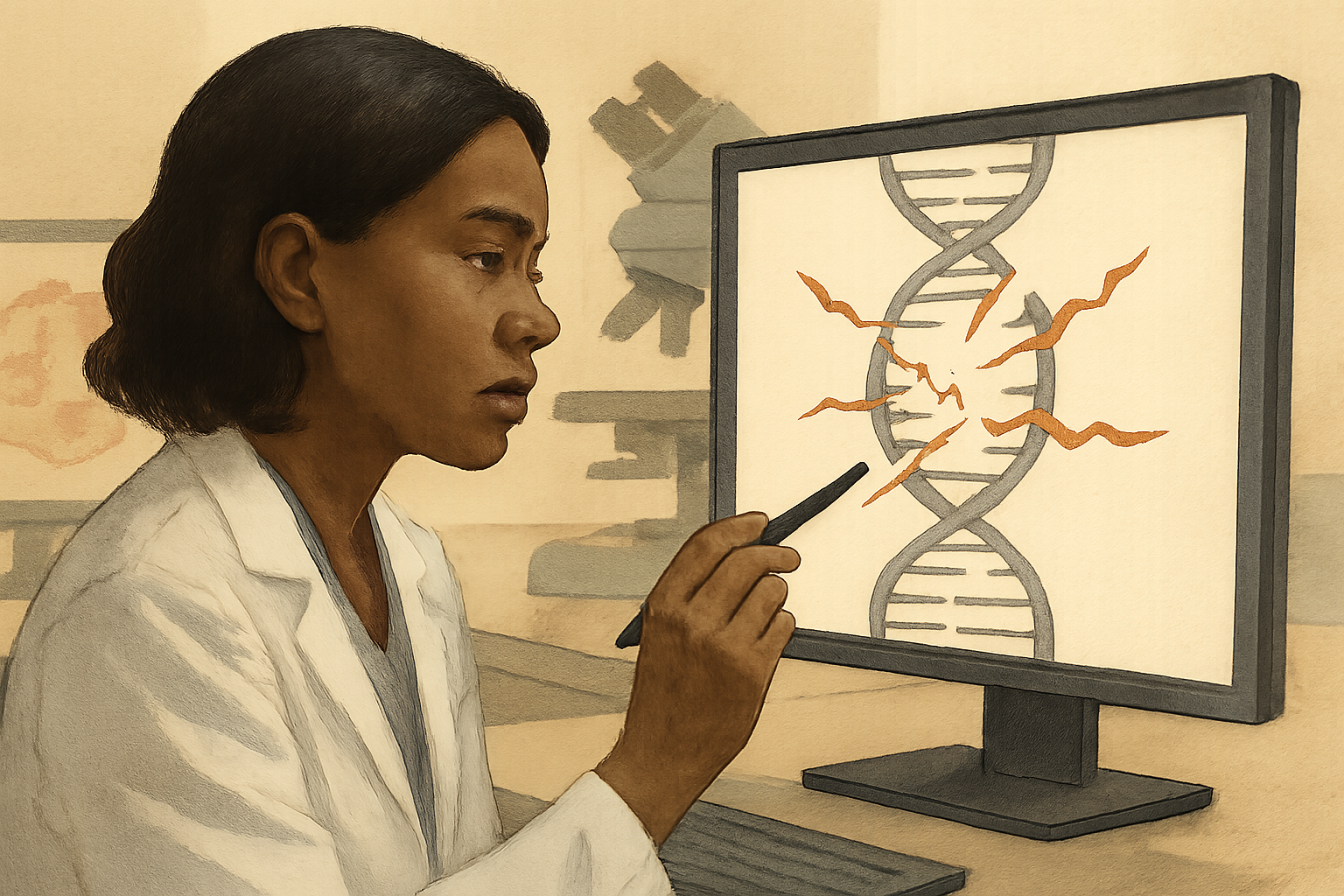
Limitations and Uncertainties
While the study advances the understanding of mutational complexity in cancer, it does not directly establish cause-and-effect relationships between specific mutation patterns and cancer outcomes. The detection of mutational patterns alone does not translate immediately into new treatments or diagnostics. More research is needed to clarify how these complex mutations affect cancer behavior and therapy response.
Potential Implications
Better characterization of complex mutational phenomena could help refine cancer diagnostics and lead to improved classification of cancers based on their genetic profiles. This might eventually support the development of more targeted therapies. However, practical clinical applications require further investigation and validation.
Source: Nature Cancer
Paste the copied caption into your Instagram post. Caption links are not clickable; add the article URL to a Story link sticker or your profile link.
Open Instagram