What Happens in Your Brain When You Can't Stop Laughing?
Ever find yourself laughing uncontrollably, even when it’s not the right moment? Scientists are exploring what happens in the brain during these episodes.
Paste the copied caption into your Instagram post. Caption links are not clickable; add the article URL to a Story link sticker or your profile link.
Open InstagramFor information, not personal medical advice. Discuss treatment decisions with a qualified clinician.
Key takeaways
- Uncontrollable laughter may be linked to changes in brain regions responsible for emotional regulation and motor control, such as the limbic system and frontal lobes.
- Neurological conditions like certain types of epilepsy or brain injuries can cause pathological laughter, characterized by uncontrollable laughter without humor.
- Current research is limited and mainly correlational, with unclear causes in people without known brain damage or disease, and the influence of social or psychological factors remains uncertain.
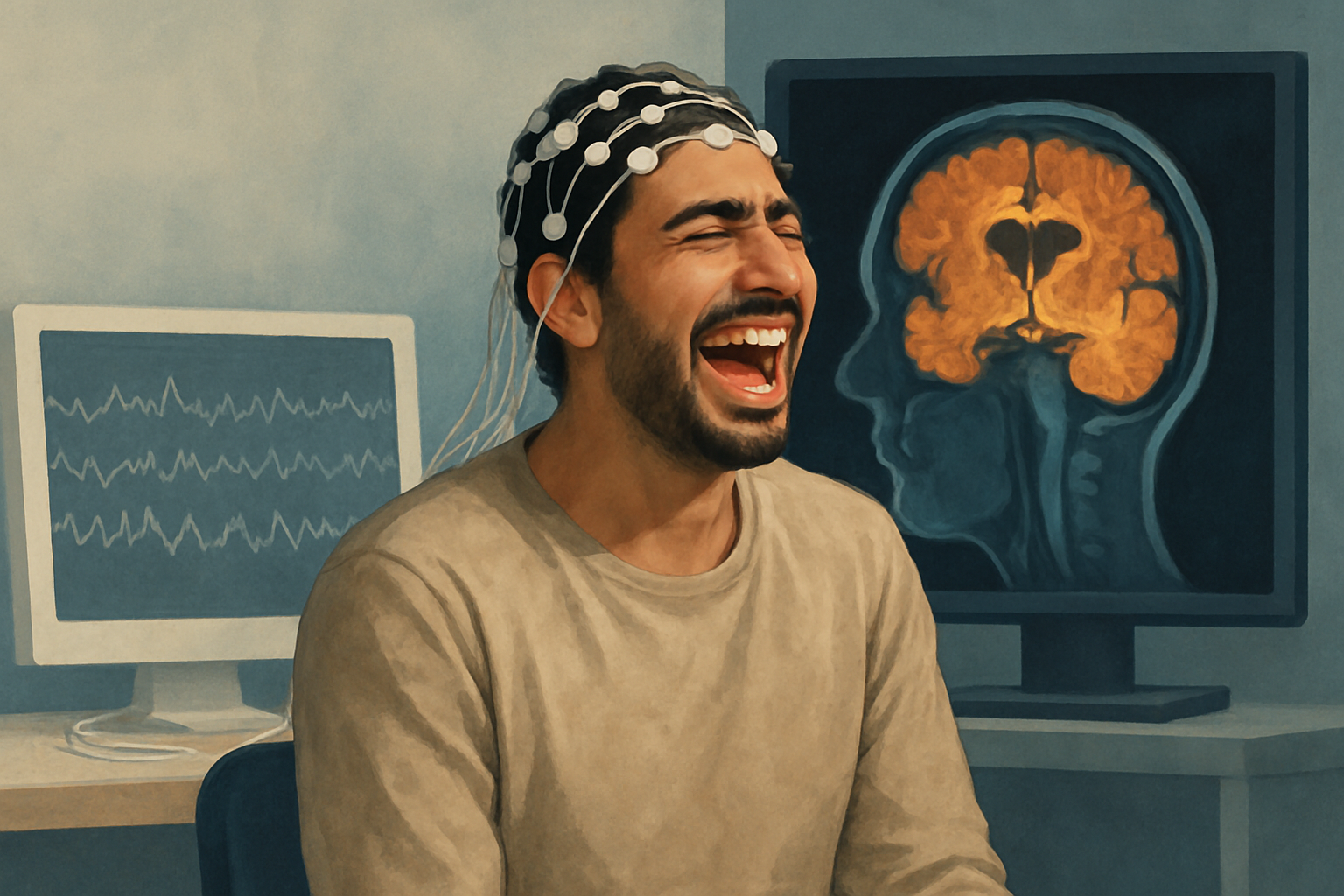
Laughing is a natural response to humor or joy, but sometimes people experience uncontrollable laughter, where they keep laughing even when it’s inappropriate. This phenomenon has caught the interest of neuroscience researchers aiming to understand the brain’s role in regulating laughter.
Understanding Uncontrollable Laughter
When laughter becomes uncontrollable, it may be linked to changes in specific brain regions involved in emotional regulation and motor control. Researchers propose that certain areas, such as parts of the limbic system and frontal lobes, play key roles in managing when and how we laugh.
Evidence from Brain Studies

Brain imaging and neurological studies have observed that disruptions or abnormalities in these brain regions can lead to episodes of excessive or inappropriate laughter. For example, some neurological conditions, including certain types of epilepsy or brain injuries, are associated with what is called "pathological laughter," where a person cannot control laughter despite the absence of humor.
Limitations and Unknowns
Current research is limited in fully explaining why uncontrollable laughter happens in people without identifiable brain damage or disease. It is unclear how much normal social and psychological factors might also influence these episodes. Moreover, much of the evidence focuses on correlation, meaning we do not yet understand the exact cause-and-effect relationships.
Potential Implications
Understanding how the brain controls laughter could help address conditions that involve inappropriate emotional responses. However, these insights are still emerging, and more research is needed before practical treatments or interventions can be developed.
Source: Medical Xpress
Paste the copied caption into your Instagram post. Caption links are not clickable; add the article URL to a Story link sticker or your profile link.
Open Instagram