Why some people escape Alzheimer’s despite carrying a high-risk gene
Scientists have found a rare genetic mutation that may protect certain individuals from developing Alzheimer’s disease, even when they carry genes usually linked to high risk. This discovery could lead to new strategies to prevent early brain damage associated with Alzheimer’s.
Paste the copied caption into your Instagram post. Caption links are not clickable; add the article URL to a Story link sticker or your profile link.
Open InstagramFor information, not personal medical advice. Discuss treatment decisions with a qualified clinician.
Key takeaways
- Researchers found a rare mutation in people genetically predisposed to Alzheimer’s who remain mentally sharp into their 80s, linked to protection against the disease-related brain changes.
- The mutation appears to interfere with the buildup of damaging proteins in the brain associated with Alzheimer’s progression, but its exact mechanism is not fully understood.
- Current findings show correlation, not causation; further research is needed to confirm the mutation’s effects and explore other factors contributing to brain health despite genetic risk.
Understanding the finding:
Evidence
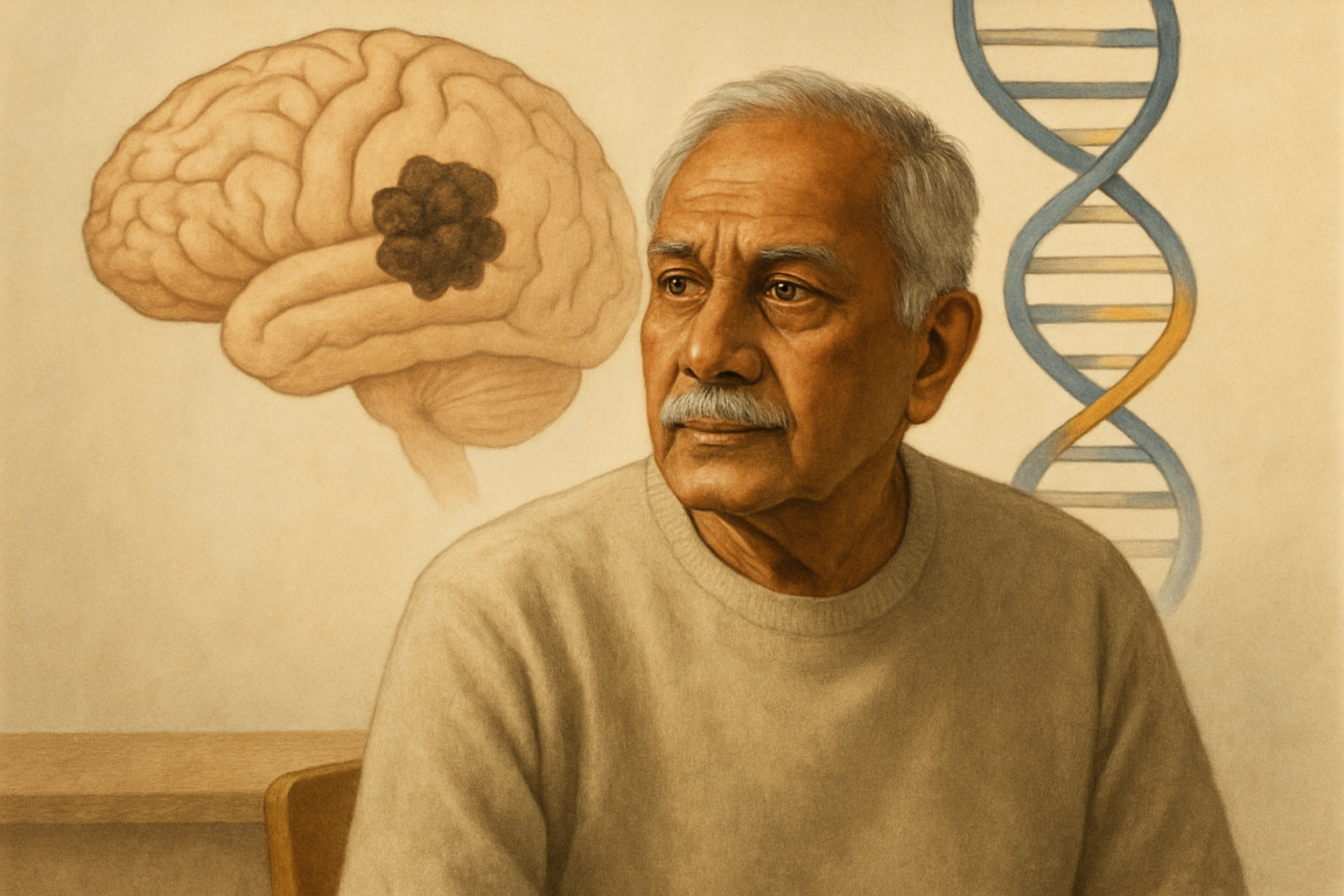
The discovery is based on studying people who are genetically predisposed to Alzheimer’s but remain mentally sharp into their 80s. Researchers compared their genetic makeup with others and found this mutation that correlates with protection against the disease-related brain changes. The mutation is thought to interfere with the buildup of damaging proteins in the brain, which are associated with Alzheimer’s progression.
Limitations
While the mutation’s protective effect has been observed, it is rare and not fully understood. The current findings primarily show correlation rather than direct causation, and it remains uncertain how exactly this mutation works in different individuals. Further research is needed to confirm these effects and explore whether other factors might also contribute to maintaining brain health despite genetic risk.
Implications
If scientists can learn how this mutation protects the brain, it could lead to new preventive treatments that mimic this natural defense. Such approaches might help delay or reduce early brain damage caused by Alzheimer’s. However, these potential therapies are still theoretical and would require extensive study before becoming available.
Source: ScienceDaily Medical
Paste the copied caption into your Instagram post. Caption links are not clickable; add the article URL to a Story link sticker or your profile link.
Open Instagram